

Concordia Seminary Newsroom
Dr. Gregory Seltz
Distinguished Alumnus Award Recipient
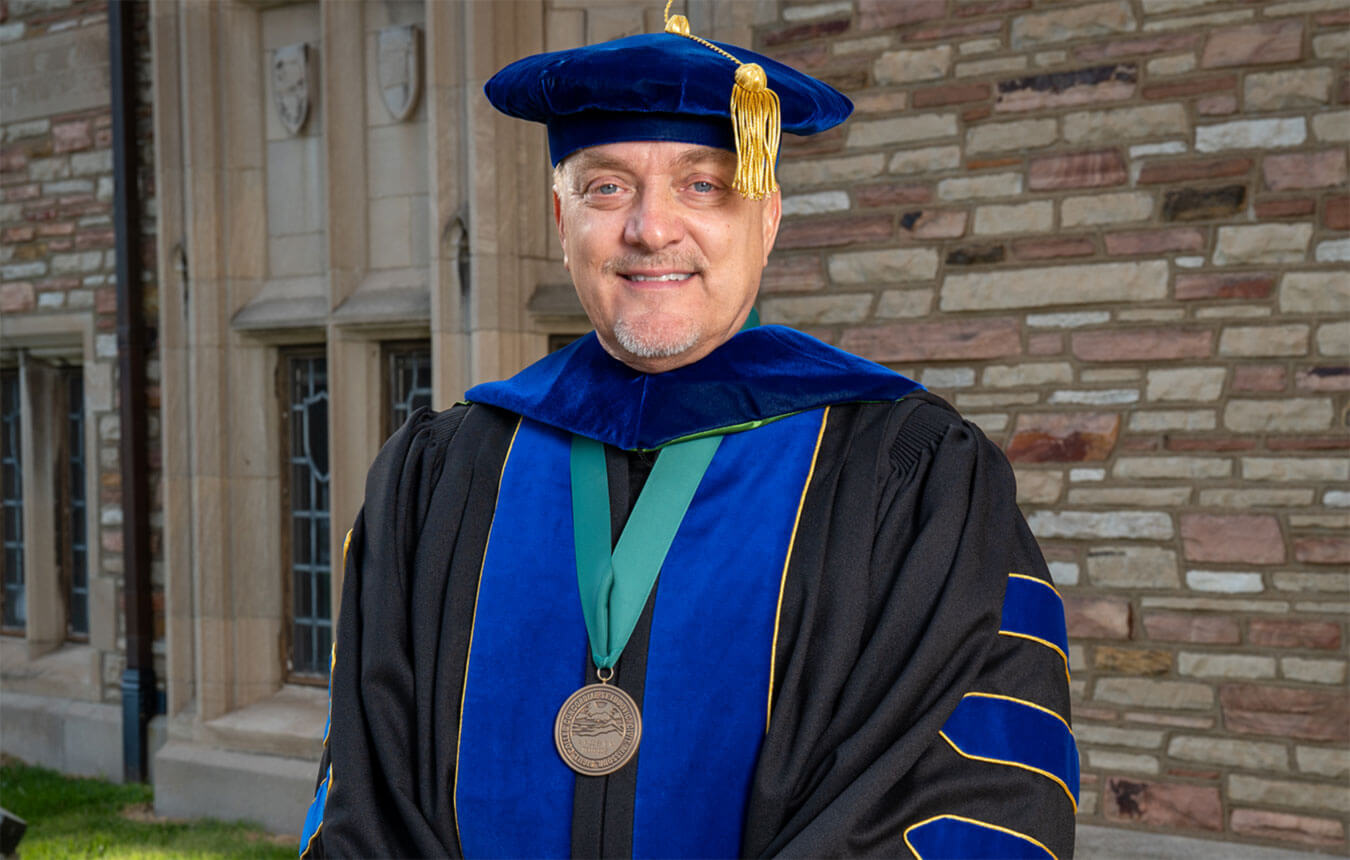
Dr. Gregory Seltz never expected the call from Seminary President Dr. Thomas J. Egger. Usually, calls to Seltz, executive director of the Lutheran Center for Religious Liberty (LCRL) in Washington, D.C., warn of legislation threatening religious freedoms or other challenging news. “When I get phone calls, it’s usually about some legislation that’s trying to put us out of business,” he explains.
Instead, Egger was naming Seltz the 2025 Distinguished Alumnus Award recipient. Seltz is a three-time Concordia Seminary alum: he earned a Master of Divinity (M.Div.) (’86); a Master of Sacred Theology (S.T.M.) (’94); and a Doctor of Philosophy (Ph.D.) (’17).
“To have the Seminary recognize my work was deeply meaningful,” Seltz says. “The award touched on my services as a church planter, pastor, the Lutheran Hour Speaker, and my role today to protect the church in my work in Washington.”
Seltz is in his eighth year leading the LCRL in the nation’s capital where he provides input, education, advocacy and resources in support of religious liberty, the sanctity of life and God’s design for marriage on behalf of The Lutheran Church—Missouri Synod’s (LCMS) congregations, schools, universities and seminaries.
“YOU NEED TO BE MATURED BY THE WORD BEFORE YOU CAN BE USEFUL AS A PASTOR.”
The award recognizes Seltz’s ministry across multiple settings — from urban streets to university classrooms, from radio broadcasts to government advocacy. His career has taken him from mission pastor roles in Dallas and New York City and urban ministry in Manhattan to teaching theology and cross-cultural ministry at Concordia University Irvine, Irvine, Calif., before becoming the voice of The Lutheran Hour broadcast.
Born in Detroit, Seltz enjoyed a typical Michigan childhood — playing basketball, attending church and excelling academically. His strong Christian faith developed through his Lutheran family and teachers at Lutheran High School West.
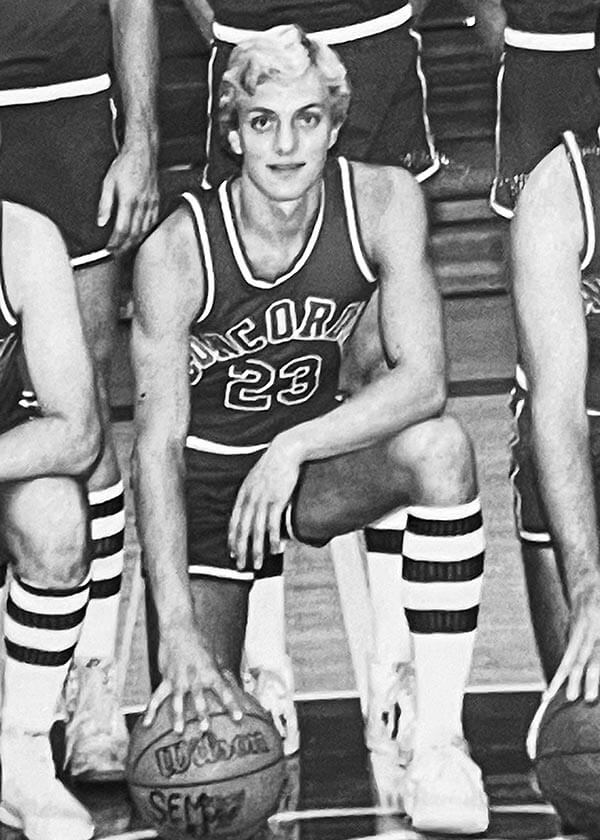
His basketball prowess earned honorable mention from the Detroit News. He was a member of the 1977 All-Metro team, during the same era when Earvin “Magic” Johnson dominated Michigan high school hoops. After graduation, Seltz headed to the University of Michigan with dual ambitions: pursuing medicine and walking onto Coach Johnny Orr’s Wolverines basketball team.
University life quickly challenged his faith. “They were laughing at my beliefs in biology class,” he recalled. “I didn’t see how being a Christian got in the way of doing excellent work in the lab.”
While at Michigan, Seltz began taking classes at nearby Concordia University Ann Arbor, Ann Arbor, Mich., (CUAA). The faculty there made a profound impression.
“Not only were there great science teachers, but also great men of faith,” Seltz says. These professors recognized his potential and urged him toward ministry. Though he respected pastors, Seltz never envisioned himself in the pulpit.
Their encouragement proved transformative. By his sophomore year, he transferred fully to CUAA, abandoning his Michigan studies for religious training. He immersed himself in theological education, learning both ancient Greek and Hebrew.
Basketball remained central to Seltz’s life at CUAA and later at Concordia Seminary. “I loved playing basketball at the Seminary. I think that was very instrumental,” he says. The court offered balance to his rigorous academic pursuits.
His theological education provided the essential depth he desired. “I needed to go deep into the Scriptures and to be challenged,” Seltz says. The ancient languages he mastered proved particularly valuable. “I really learned how to read the Scriptures. You need to be matured by the Word before you can be useful as a pastor.”
At the Seminary, Seltz found exceptional talent both on the court and in the classroom. “Ron Rall was our coach and we had 14-15 guys who could play,” he remembers. “These were guys who were well-rounded and also great pastors.”
Seltz credits his teammates’ “muscular faith” for shaping his ministry philosophy, suggesting their disciplined approach to basketball translated meaningfully to spiritual leadership.
“IT’S HIS MINISTRY, NOT YOUR MINISTRY.”
Two key mentors influenced Seltz during his Seminary years: Dr. Norman Nagel impressed him with an ability to simplify complex concepts always getting to the heart of the Gospel, while Dr. Guido Merkens, Seltz’s vicarage supervisor, instilled in him his strong missional spirit. “You can use any opportunity to reach a person for Christ and Merkens taught me how to do that,” Seltz says.
Family also has played a crucial role in Seltz’s ministry journey. “My wife, Yvette, is gifted and she’s been a great partner. I think she’s the better evangelist of the two of us,” he says. “Our daughter, Devin, is just a joy to us. She embodies the Gospel in a way of which I couldn’t be prouder.”
Reflecting on his ministry path, Seltz maintains humility despite his accomplishments. He speaks passionately about his urban ministry work and Ph.D. pursuit while acknowledging the setbacks and challenges, including the difficult decision to leave The Lutheran Hour for Washington.
Through it all, Seltz learned that “it’s His ministry, not your ministry.”
“Be open to the fact that He can take your skills and abilities and even your weaknesses, and they can all be useful in His hands,” Seltz says.
The award recognizes Seltz’ service as a faithful witness across diverse ministry settings, always emphasizing that the church belongs to Christ alone. “You don’t do these things because you’re looking for accolades,” he says. “You do them because you’re supposed to do them.”